
The Pact
When we tell the story of human evolution, we usually talk about fire, flint, and spears. But there is a parallel history encoded in your genome. It’s an invisible, microscopic story that suggests our destiny was shaped by a silent pact made long ago.
Human digestive systems are relatively short and simple, suited for fruit and easily digested proteins. Yet, we conquered the globe by eating grass seeds—wheat, barley, rye—which are, in their raw state, bio-unavailable, gut-irritating, and indigestible. How did a primate with a fruit-eater’s gut survive on a grass-eater’s diet? We didn't evolve a new organ to do it. We built one.
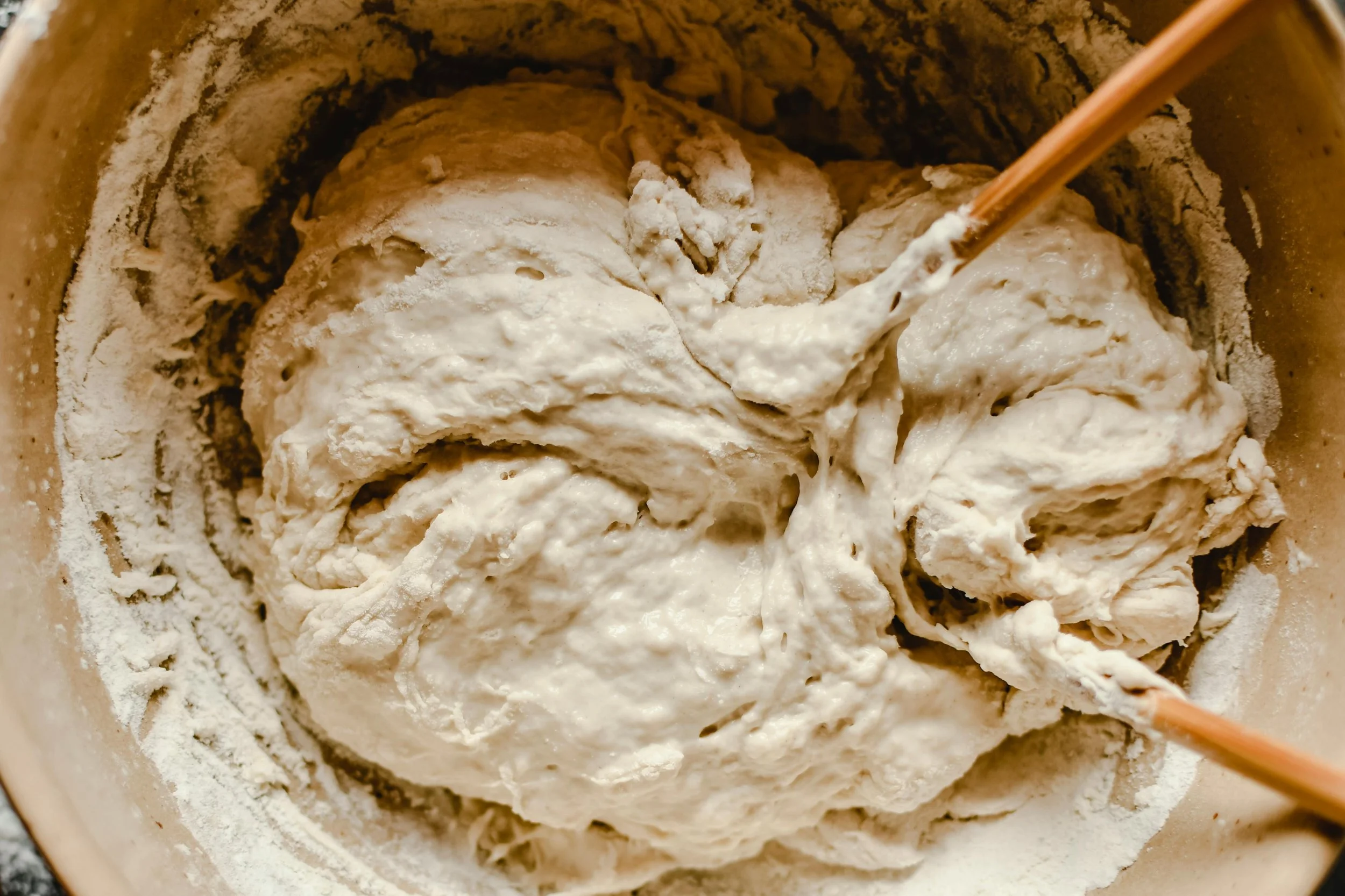
This is the story of the ancient biological pact between humans and microbes, that enabled us to build an “external stomach” in a sourdough starter jar.
why did we start eating grass?
To understand why sourdough matters, you have to look at the human gut.
For millions of years, our primate ancestors thrived on fibrous plants and fruits. But as the human brain grew, it became expensive. It demanded more energy than raw plants could provide.
While meat provided the initial spark for brain growth, modern genetic anthropology suggests it was the reliable, abundant energy of cooked starch that fueled its massive expansion [1].
The evidence is hidden in your saliva.
Specifically, it’s in the AMY1 gene, which creates amylase, the enzyme that breaks complex starch into simple sugar.
Our closest relatives, chimpanzees, have only two copies of this gene. Modern humans? We can have up to 20 [2].
This genetic scar is the fingerprint of natural selection, appearing as far back as 800,000 years ago and accelerating as our starch intake increased [3]. It allowed early humans to start digestion the moment food hit our tongues, unlocking vast reserves of glucose from wild starchy tubers and roots.
But there was a catch.
The fortress of the seed.
Genetic adaptation has limits. While AMY1 allowed us to digest starch, the seed of the grass plant, the grain, presented a fortress.
Grains do not want to be eaten.
They are encased in tough husks and defended by a chemical arsenal of anti-nutrients, like phytates and protease inhibitors. These compounds are designed to lock away minerals and prevent digestion, ensuring the seed survives the trip through a predator’s gut [4].
To unlock the grain, humans needed more than just better enzymes. We needed a new organ.
Enter the “external stomach”.
Biology is slow. Technology is fast.
Rather than waiting millions of years to evolve a digestive system that could handle grains (like a cow’s rumen), early humans simply built one out of clay.
This is what evolutionary biologist Richard Dawkins calls an "extended phenotype"—when an organism uses its environment to extend its biological reach [5].
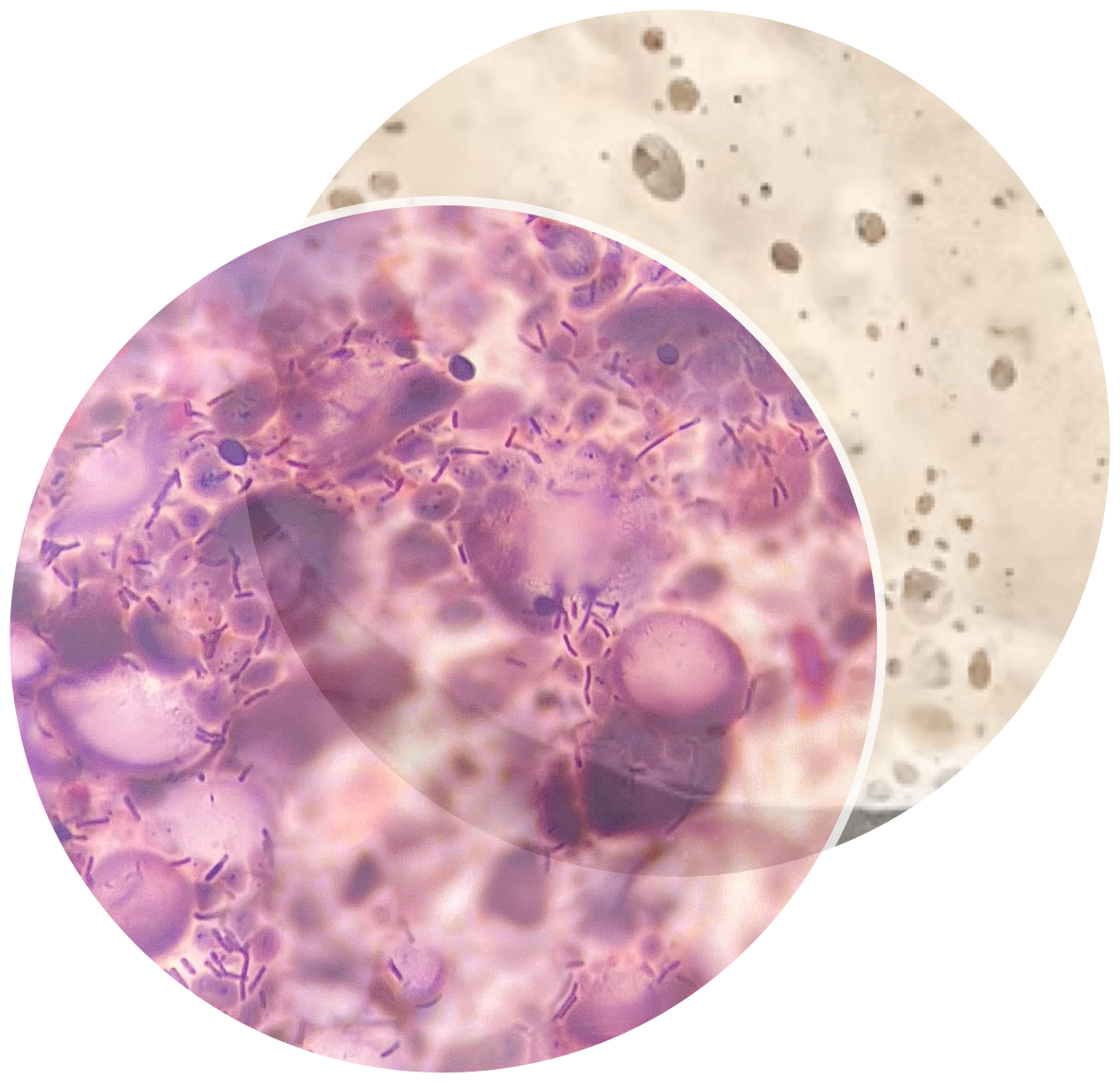
By cultivating wild yeasts and lactic acid bacteria like Fructilactobacillus sanfranciscensis in a jar, we created a "pre-digestion" chamber.
Inside that jar, the microbes do the heavy lifting:
They break down the phytates that block mineral absorption [6].
They degrade the gluten proteins that can trigger inflammation [7].
They synthesise B-vitamins that aren't present in the raw flour [8].
We essentially outsourced our digestion to Lactobacillus. We stopped being just eaters, and became 'bacteriovores'—consuming the metabolic work of our microbial partners.
But didn’t farmers invent bread?
Here is where the timeline gets twisted.
For a long time, we believed that bread was a luxury that only appeared after the Agricultural Revolution. The logic was linear: first we farmed, then we had surplus grain, then we baked.
But a recent discovery in the Black Desert of Jordan upended that story.
At a site called Shubayqa 1, researchers found charred crumbs of flatbread in the fireplaces of Natufian hunter-gatherers [9].
These crumbs dated back 14,400 years. That’s a full 4,000 years before the dawn of agriculture.
These hunter-gatherers were harvesting wild grains and tubers, and performing the labor-intensive work of de-husking, milling, drying and baking them long before they ever planted a seed.
This implies that the desire for bread didn't come from farming. It likely drove farming. The wild yeasts and bacteria that would eventually rise our dough were the inevitable next step.
The "ancient pact" was written in the Paleolithic era.
Re-signing the pact.
When you bake with sourdough today, true, long-fermented sourdough, you are re-signing this ancient pact.
You are acknowledging that you are not a solitary individual. You are a holobiont—a superorganism reliant on the invisible labor of trillions [10].
By sterilising our food supply with commercial yeast and preservatives, we broke the pact. We silenced the conversation between our gut immune system and the microbial world we co-evolved with, potentially contributing to the rise in modern food sensitivities [11].
The bubbling starter on your counter is not just a pet, and it's certainly not just an ingredient.
It is a biological technology that connects the soil, the microbe, and the human gut in a continuous, life-sustaining cycle.
References
Hardy, K., et al. (2015). The importance of dietary carbohydrate in human evolution. The Quarterly Review of Biology.
Perry, G. H., et al. (2007). Diet and the evolution of human amylase gene copy number variation. Nature Genetics.
Yilmaz, F., et al. (2024). Reconstruction of the human amylase locus reveals ancient duplications seeding modern-day variation. Science.
Lott, J. N. A. (1984). Accumulation of seed reserves of phosphorus and other minerals. Seed Physiology.
Dawkins, R. (1982). The Extended Phenotype.
Leenhardt, F., et al. (2005). Moderate decrease of pH by sourdough fermentation is sufficient to reduce phytate content of whole wheat flour through endogenous phytase activity. Journal of Agricultural and Food Chemistry.
Rizzello, C. G., et al. (2007). Highly efficient gluten degradation by lactobacilli and fungal proteases during food processing: new perspectives for celiac disease. Applied and Environmental Microbiology.
Capozzi, V., et al. (2012). Biotechnological production of vitamin B2-enriched bread and pasta. Journal of Agricultural and Food Chemistry.
Arranz-Otaegui, A., et al. (2018). Archaeobotanical evidence reveals the origins of bread 14,400 years ago in northeastern Jordan. Proceedings of the National Academy of Sciences.
Sender, R., Fuchs, S., & Milo, R. (2016). Revised estimates for the number of human and bacteria cells in the body. PLOS Biology.
Rook, G. A. W. (2003). 99th Dahlem Conference on Infection, Inflammation and Chronic Inflammatory Disorders: The "Old Friends" Hypothesis. Clinical and Experimental Immunology.
Last updated: 8 December, 2025